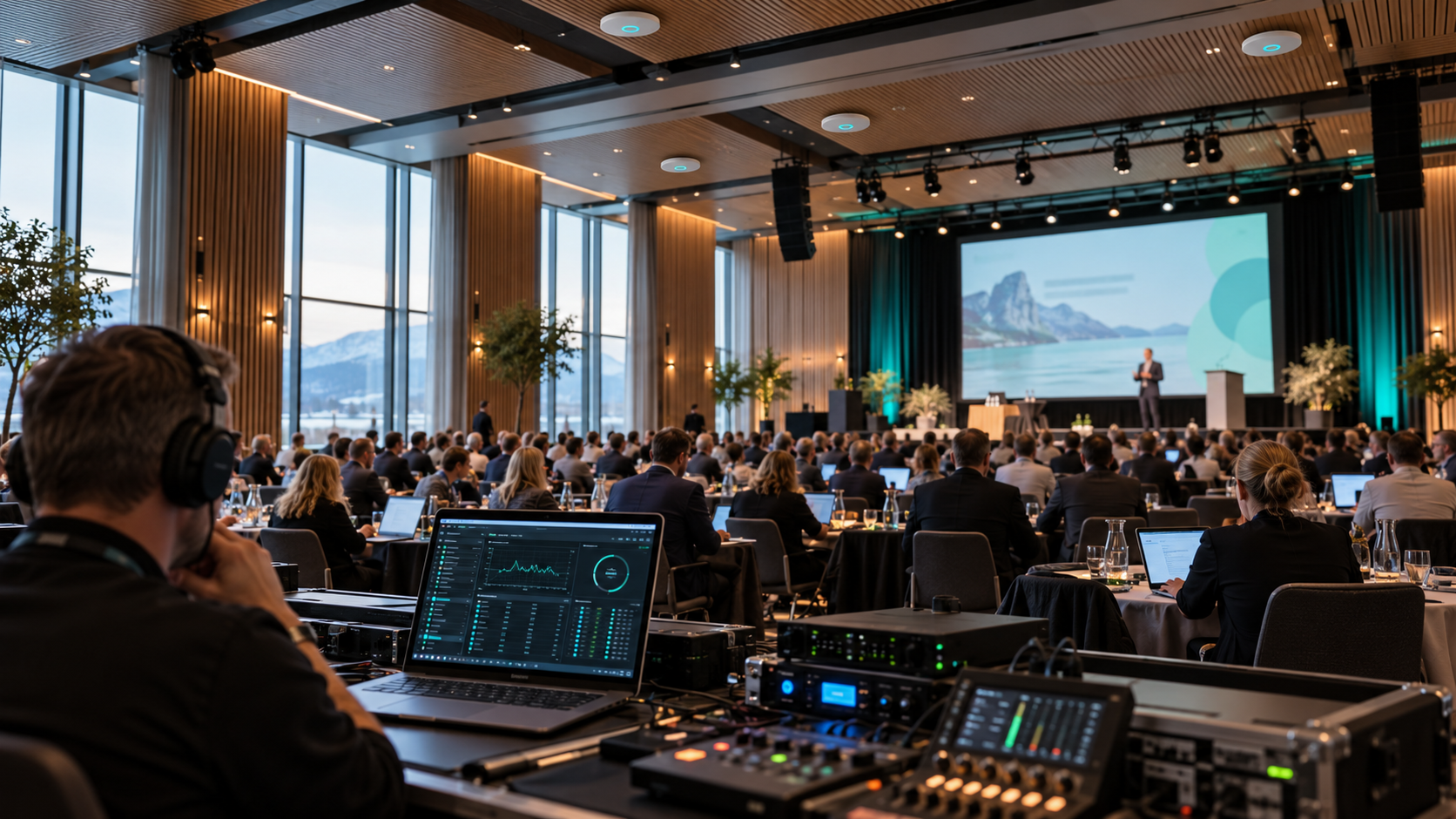
Context: Hotel and conference production
Conference Wi-Fi was part of my IT and AV work at Clarion Hotel Sign: a 558-room hotel with 18 meeting rooms, where I spent more than eleven years supporting the systems behind hospitality and live events.
The network had to serve the conference audience while the hotel continued operating. When the room filled up, connectivity could not become another problem for the people running the event.
The problem: roughly 2,000 devices needing connectivity
We had roughly 2,000 devices constantly needing connectivity, with too little access-point capacity for the simultaneous demand. Users encountered Wi-Fi login timeouts, and new arrivals connecting could leave people already connected losing their connection.
Meanwhile, a 400 Mbps internet connection was shared across conference traffic, point-of-sale terminals and the management network. This was a capacity problem affecting both the guest experience and the systems the business relied on.
Two constraints, one operational problem
Wireless connection capacity and internet bandwidth needed separate attention. A faster internet connection alone would not solve the shortage of wireless capacity. Improving wireless access would still leave the same shared internet connection carrying the combined demand.
That distinction shaped the upgrade: accommodate more concurrent wireless clients and allow enough upstream capacity for conference and operational traffic together.
What we installed
We installed an Aruba enterprise controller specified for up to 10,000 devices, together with dual-radio access points to support more concurrent connectivity.
The controller’s stated capacity provided room beyond the approximately 2,000-device demand we were dealing with. It was a platform capacity figure, not a claim that we tested 10,000 simultaneous users or that every device could receive a particular speed.
The access-point upgrade addressed the practical limitation in the rooms: people needed to join and remain connected as more delegates arrived.
Why the internet upgrade called for 2 Gbps
The combined workload required a 2 Gbps internet connection, five times the nominal capacity of the existing 400 Mbps service. The requirement covered the hotel workload as well as conference devices.
That figure describes the capacity required for the upgrade. The operational result below concerns the wireless improvements; it is not a measured claim about a 2 Gbps service or individual client throughput.
What changed for users
After the wireless upgrade, users were no longer experiencing the Wi-Fi login timeouts. New arrivals could connect without displacing the people who had connected before them.
That was the useful result: joining the network stopped being a competition with the next person entering the room. These are observations from operating the environment, rather than a synthetic benchmark or an uptime percentage.
What I take from the work
A conference network belongs to the wider operation around it. Delegates need connectivity, but so do the terminals taking payments and the systems supporting management. Planning around only one group misses the actual workload.
For me, this is where infrastructure and live AV meet: understand the demand, identify the constraints, and judge the change by whether people can get on with what they came to do. The room has a start time.