Context: Personal application
The question
How can I compare heroes using a shared dataset and a scoring rule I can inspect, rather than relying on a ranking with hidden assumptions?
The approach
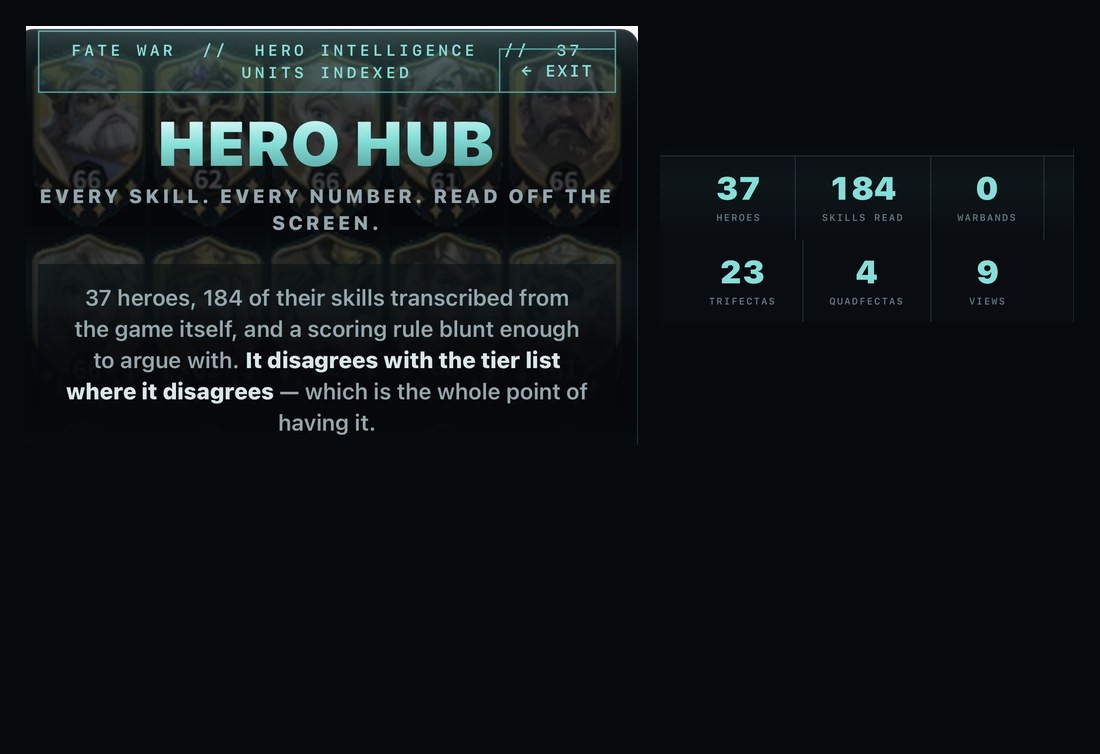
Hero Hub indexes 37 heroes and 184 skills transcribed from the game itself. It scores them with a deliberately simple formula, and makes disagreements with popular rankings visible.
One roster, several ways to investigate it
The roster supplies a drag-and-drop tier board, radar comparisons, pairings, timeline, arena and versus views. Filters narrow the list by troop type, skin status and how a hero was obtained.
Personal changes survive updates
Local edits are tracked separately from the shipped dataset, so updating the reference does not overwrite personal changes. The application is deployed on Cloudflare Workers.
Result and limits
The deployed application makes the roster, comparison views and personal edits available in one place. Keeping the scoring rule visible gives readers something concrete to question.
A transparent formula is still a model of the game. Its ranking should be read alongside the underlying skills and the situation being compared. The project does not establish measured player outcomes or adoption figures.
Skills in practice
- Data modelling: a shared roster supplies the comparison tools and views.
- Transparent scoring: the ranking uses a formula readers can inspect and challenge.
- State management: personal edits remain distinct from the reference data.
- Deployment: the application runs at the edge without a dedicated application server to maintain.